The setting and local population changes
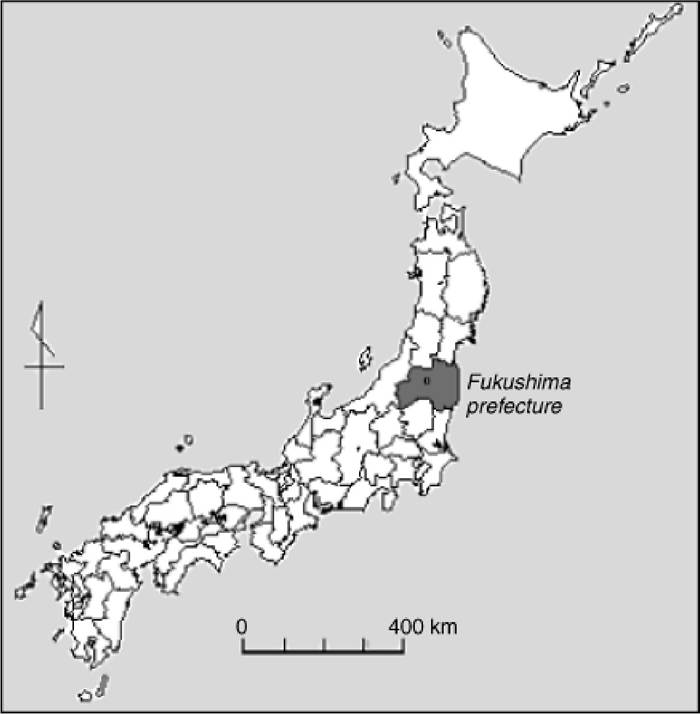
The settings of this study are Shimomoriya and Niita, two farming villages in the present Fukushima prefecture in northeastern Japan (see Maps 17.1 and 17.2). During the Tokugawa period, both belonged to the Nihonmatsu domain that governed the central part of the prefecture.
Located at the foot of the Ou mountain range, Shimomoriya was susceptible to cold summers and poor harvests resulting from chilly gusts off the mountains (Narimatsu 1985: 1—3). Because the village was located in a hilly area with severe winter weather, most of its agricultural land was not fertile and unfit to grow cash crops such as mulberry trees.4 Located in a plain between the capital town of Nihonmatsu and the market town of Koriyama, two major population centres in the domain at that time, Niita enjoyed a better climate for agriculture (Narimatsu 1992: 4—6). Though situated north of Shimomoriya, Niita had more fertile agricultural land fit to be cultivated as rice paddies and as mulberry fields.5 Nonetheless, lying on the banks of the Gohyaku river, the village was vulnerable to frequent floods.Map 17.1 Japan with Fukushima prefecture marked
Though somewhat different in their geographical conditions, both villages were almost entirely agricultural (inhabited almost entirely by peasants) and depended mostly on rice agriculture, supplemented by a number of dry crops (Narimatsu 1985: 152-80, 1992: 6; Nagata, Kurosu, and Hayami 1998). Given the underdeveloped and undermechanized agricultural technologies of the time, the northeastern region, in which the two villages were located, was the northernmost boundary of rice farming in Tokugawa Japan. These circumstances often put the villagers at the mercy of fluctuations in harvest yields, driving their living standards to near or below subsistence levels.
As mentioned, northeastern Japan experienced a number of famines and crop failures in the eighteenth and nineteenth centuries (Saito 2002).6 Let us see how the populations in the villages of Shimomoriya and Niita were affected by these famines and crop failures. As illustrated in Figure 17.1, according to the local population registers (ninbestu-aratame-cho, NAC), Shimomoriya was a relatively small village with a population of 419 in 1716. The village population was relatively stable in the first thirty-five years for which the records are available, until it started to decline at around the time of Horeki famine in 1755-6. Devastated by the great
Map 17.2 Fukushima prefecture
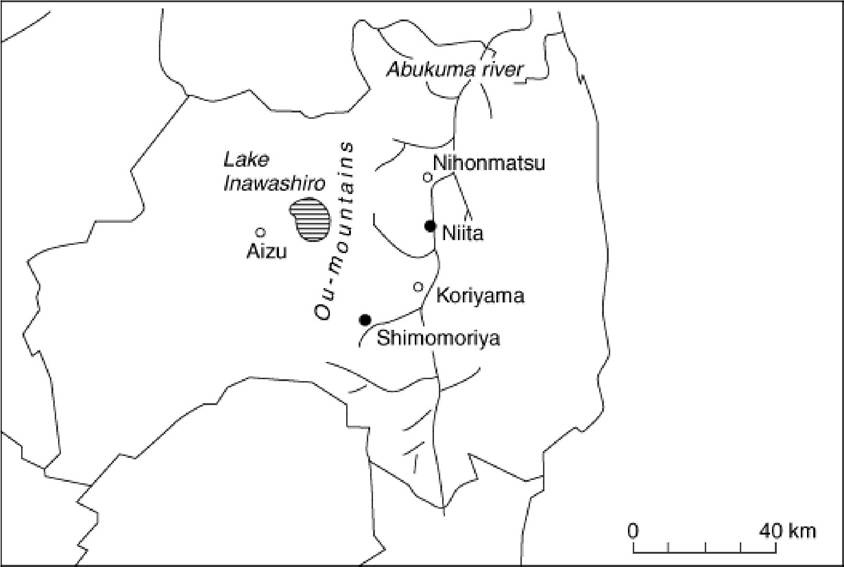
Figure 17.1 Population size of the villages of Shimomoriya and Niita, 1716—1870
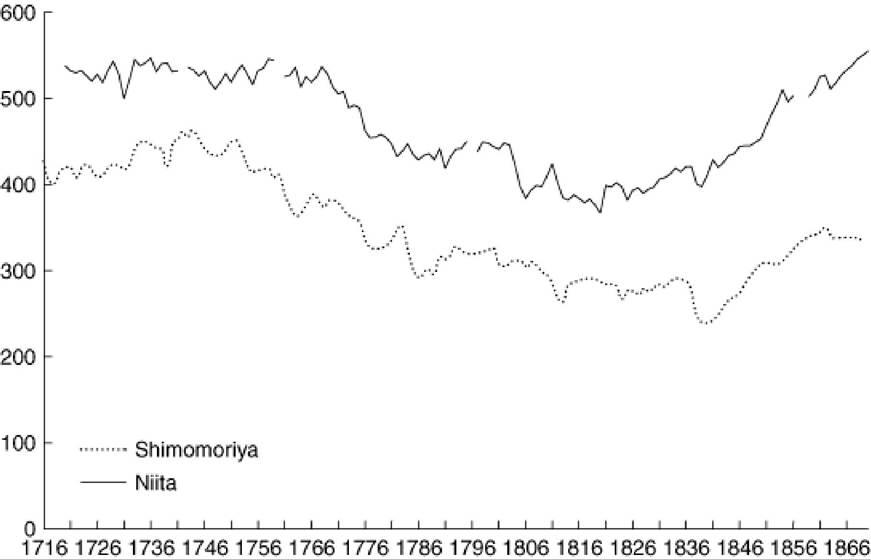
Tenmei famine in 1782—7, the village population further declined to 286 in 1786—a decline of 32% in the seventy years from 1716. Though the population was restored somewhat during the 1790s—1820s, it again took a dramatic downturn during the Tempo famine in 1833—8, reaching a nadir of 238 in 1840. Although the population recovered gradually afterwards, to 328 by 1869, it did not recover the 1716 level during this period.
Niita was a larger village with a population of 538 in 1720 (see Figure 17.1). The village population was also stable, as in the case of Shimomoriya, for about fifty years, until it began to decline in 1770. Owing mainly to the Tenmei famine in the mid-1780s and a long spell of bad weather preceding it (Koriyama-shi 1981a: 340-1, b: 176-80), Niita's population plunged from 530 in 1770 to 430 in 1786—a decline of 19% in a mere fifteen years. After the population fluctuated at the level of around 420-450 from 1786 to 1800, it decreased again in the early 1800s. Reaching a nadir of 367 in 1820, the village population then started a gradual increase. The population size of Niita was not as seriously affected as Shimomoriya by the Tempo famine; it recovered, and even surpassed, the 1720 level by the late 1860s.
In summary, except in the first few decades of the records, when they were stable, and in the last few decades, when they showed an upturn, the population sizes in the two villages were in overall decline. Especially large net population losses occurred at the times of the two major famines in the mid-1780s and the late 1830s. Hence, although the evidence is by no means definitive, these findings seem to suggest that the village populations were affected negatively by the acute decline in agricultural output caused by widespread famine and crop failures.
2.3