David Ricardo on Diminishing Returns
Ricardo in much of his reasoning set aside what may be called statically and dynamically increasing returns. The beneficial effects of capital accumulation on productivity mediated through the extension of the division of labour, which assumed centre stage in Smith’s analysis, play hardly any role in Ricardo’s.
In modern parlance, the problems of externalities are given only sparse attention. This does not mean that Ricardo was of the opinion that they are of negligible importance, certainly not. Recall that Ricardo explicitly subscribed to much of Smith’s analysis and set himself the moderate task of correcting views of the Scotsman he deemed wrong. These concerned especially Smith’s view of the long-term trend of profitability as capital accumulates and the role of scarce natural resources in it. Ricardo was keen to show that, given the real wage rate, the rate of profits cannot fall as a consequence of the “competition of capitals”, as Smith had argued, but only because of diminishing returns due the scarcity of land(s). Much of Ricardo’s argument therefore was developed in terms of the explicit and often implicit assumption that the set of (constant returns to scale) methods of production from which cost-minimizing producers can choose is given and constant. In such a framework the question then is how scarce natural resources affect profitability as capital accumulates. The resulting vision is reflected in what Ricardo called the “natural course” of things.As capital accumulates and population grows, and assuming the real wage rate of workers given and constant, the rate of profits is bound to fall; due to extensive and intensive diminishing returns on land, “with every increased portion of capital employed on it, there will be a decreased rate of production” (Ricardo 1817 [1951], hereafter Works, I: 98). Since profits are a residual income, based on the surplus product left after the used up means of production and the wage goods in the support of workers have been deducted from the social product (net of rents), the “decreased rate of production” involves a decrease in profitability.
On the assumption that there are only negligible savings out of wages and rents, a falling rate of profits involves a falling rate of capital accumulation. Hence, Ricardo’s “natural course” of things will necessarily end up in a stationary state.This path must not be identified, however, with the actual path the economy takes because technical progress, which is set aside in the argument under consideration, will repeatedly offset the impact of the “niggardliness of nature” on the rate of profits (see Ricardo Works I: 120). Ricardo is frequently presented as a technological pessimist, who believed in the overwhelming importance of diminishing returns in agriculture in combination with the Malthusian law of population and who saw the stationary state around the corner; see, for example, Blaug (2009) and Solow (2010). This interpretation does not do justice to him. As early as in the Essay on Profits of 1815 he expressed the view that there are no signs pointing in the direction of a falling rate of profits in the foreseeable future: “we are yet at a great distance from the end of our resources, and... we may contemplate an increase of prosperity and wealth, far exceeding that of any country which has preceded us” (see Ricardo Works IV: 34). This view is confirmed in a letter to Hutches Trower of 5 February 1816, in which he concluded from the fall in grain prices since 1812 that “we are happily yet in the progressive state, and may look forward with confidence to a long course of prosperity” (Ricardo Works VII: 17).
So let us see more clearly the way in which Ricardo approached the difficult problem of capital accumulation and growth. The assumptions of a given real wage rate and the absence of technical progress represent a first logical step in an approach to the problem of capital accumulation and income distribution, which proceeds in terms of distinct analytical stages (see Garegnani 1990). The attention focuses first on abstract and general principles, which are then gradually attuned to the concrete case or specific historical circumstances under consideration.
Economic theory is combined with historical analysis. Here we focus only on the first stage and set aside its historical part. The reader will therefore not be misled thinking that in our view classical political economy is co-extensive with or can be reduced to this first stage. It reaches far beyond it.Like Smith, Ricardo thought that savings and investment, that is, accumulation, would largely come from profits, whereas wages and rents played a negligible role. Hence, as regards the dynamism of the economy attention should focus on profitability.
Assuming that the marginal propensity to accumulate out of profits, s, is given and constant, a “classical” accumulation function can be formulated:

where rmin ≥ 0 is the minimum level of profitability which, if reached, will arrest accumulation (see Works I: 120).
Ricardo saw the rate of accumulation as endogenous. The demand for labour is seen to depend on the pace at which capital accumulates. As regards the long-term supply of labour Ricardo in some of his analysis adopted some form of the “Malthusian law of population”. However since, contrary to Malthus, Ricardo was no technological pessimist, he did not share the latter’s pessimism as regards the development of real wages. Real wages, he insisted, may rise, that is, the “market price of labour” may rise above the “natural” wage rate. This is the case in a situation in which capital accumulates rapidly, leading to an excess demand for labour. As Ricardo put it, “notwithstanding the tendency of wages to conform to their natural rate, their market rate may, in an improving society, for an indefinite period, be constantly above it” (Works I: 94-5). If such a constellation prevails for some time a ratchet effect may make itself felt: it is possible, Ricardo observed, that “custom renders absolute necessaries” what in the past had been comforts or luxuries.
Hence, the natural wage is driven upward by persistently high levels of the actual wage rate. Accordingly, the concept of “natural wage” in Ricardo is a flexible one and must not be mistaken for a physiological minimum of subsistence.Assuming for simplicity a given and constant real wage rate, Ricardo’s view of the long-run relationship between profitability and accumulation and thus growth (in the absence of technical progress) can be illustrated in terms of Figure 5, which is a diagram used by Kaldor (1955-56). The curve CEGH is the marginal productivity of labour-cum- capital; it is decreasing since land is scarce: when labour-cum-capital increases, either less fertile qualities of land must be cultivated or the same qualities of land must be cultivated with processes which require less land per unit of product, but are more costly in terms
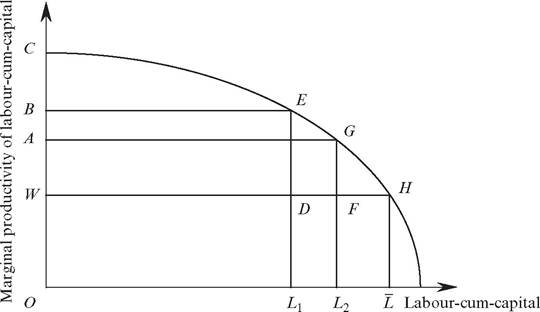
Figure 5 Land as an indispensable resource
of labour-cum-capital. Let the real wage rate equal OW. Then, if the amount of labour- cum-capital applied is L1, the area OCEL1 gives the product, OWDL1 gives total capital employed, and BCE total rent. Profit is determined as a residual and corresponds to the rectangular WBED. As a consequence, the rate of profits can be determined as the ratio of the areas of two rectangles which have the same basis and, therefore, it equals the ratio WB/OW. Let us now consider the case in which the amount of labour-cum-capital is larger, that is, L2. Then OCGL2 gives the product, OWFL2 the capital, ACG the rent, and WAGF profits. The rate of profits has fallen to WA/OW. Obviously, if a positive profit rate implies a positive growth rate (that is, rmin = 0), the economy will expand until labour-cum-capital has reached the level L. At that point the profit rate is equal to zero and so is the growth rate. The system has arrived at a stationary state.
Growth has come to an end because profitability has.For both Smith and Ricardo the required size of the work force is essentially generated by the accumulation process itself. That is, labour power is treated as a kind of producible commodity. It differs from other commodities in that it is not produced in a capitalistic way in a special industry on a par with other industries, but is the result of the interplay between the generative behaviour of people and socioeconomic conditions. In the most simple and abstract conceptualization possible, labour power is seen to be in elastic supply at a given and constant real wage basket. Increasing the number of baskets available in the support of workers involves a proportional increase of the work force. In this view, the rate of growth of labour supply adjusts to any given rate of growth of labour demand without necessitating a variation in the real wage rate. In a more sophisticated conceptualization, higher rates of growth of labour supply presuppose higher levels of the real wage rate. However, the basic logic remains the same: in normal conditions the pace at which capital accumulates regulates the pace at which labour, a non- accumulable factor of production, grows. (For a more detailed presentation, see Kurz and Salvadori 2006.)
Thus labour cannot put a limit to growth because it is generated within the growth process. The only limit to growth can come from other non-accumulable factors of production. That is, there is only endogenous growth in Ricardo. This growth is bound to lose momentum as the system hits its natural barriers, especially as soon as extensive and intensive diminishing returns make themselves felt and are not counteracted by a sufficient technical progress.
Ricardo contemplated the implications for income distribution and the rate of expansion of the economic system in the hypothetical case in which land of the best quality is available in abundance. In one place he wrote:
Profits do not necessarily fall with the increase of the quantity of capital because the demand for capital is infinite and is governed by the same law as population itself.
They are both checked by the rise in the price of food, and the consequent increase in the price of labour. If there were no such rise, what could prevent population and capital from increasing without limit? (Ricardo Works VI: 301)If land of the best quality was available in abundance it would be a free good and no rent would be paid for its use. In this case the curve of the graph showing the marginal productivity of labour-cum-capital would be a horizontal line and the rate of profits would be constant whatever the amount of labour-cum-capital employed. As a consequence, other things equal, the growth rate would also be constant: the system could grow for ever at a rate that equals the given rate of profits times the propensity to accumulate. There are other possible interpretations of a horizontal marginal productivity of labour- cum-capital: either workers consume only non-agricultural commodities, which are produced without using land either directly or indirectly (D’Alessandro and Salvadori 2008) or the economy is small and open and the economy is so large that any increase in the pace of the accumulation process is obtained through an increase in the production of the industrial commodities (Salvadori and Signorino 2015).
To conclude, two observations are apposite. First, vis-a-vis a widespread misconception it deserves to be emphasized once again that Ricardo was no technological pessimist. In the above we cited some passages from his work in support of this. Here is another. In his entry on the “Funding system” for volume IV of the Supplements to the Encyclopedia Britannica, published in September 1820, he stressed that “the richest country in Europe is yet far distant from that degree of improvement”, that is, the stationary state, and that “it is difficult to say where the limit is at which you would cease to accumulate wealth and to derive profit from its employment” (Ricardo Works IV: 179). Secondly, in the new chapter 21 “On machinery” added to the third edition of the Principles (1823) Ricardo responded to the movement of the Luddites and a pamphlet by John Barton, in which the introduction of machinery was taken to be responsible for unemployment and workers’ distress. Ricardo admitted that a particular form of improved machinery, the one that decreases the gross produce, is harmful to workers and that there is no presumption of an automatic compensation of the displacement of workers. Ricardo’s chapter inspired Marx to his concept of an “industrial reserve army of the unemployed” and is the starting point of an extended debate on “technological unemployment”. The chapter contains also a clear statement of the fact that the use of machinery is not limited to the production of luxury goods, as in Smith, but plays an increasingly important role also in the production of “necessaries” and of machinery itself. Interestingly, Ricardo even contemplated the extreme case of a fully automated production and pointed out: “If machinery could do all the work that labour now does, there would be no demand for labour. Nobody would be entitled to consume any thing who was not a capitalist, and who could not buy or hire a machine” (Ricardo Works VIII: 399-400).